
What do you want?
Try different looks before changing them!
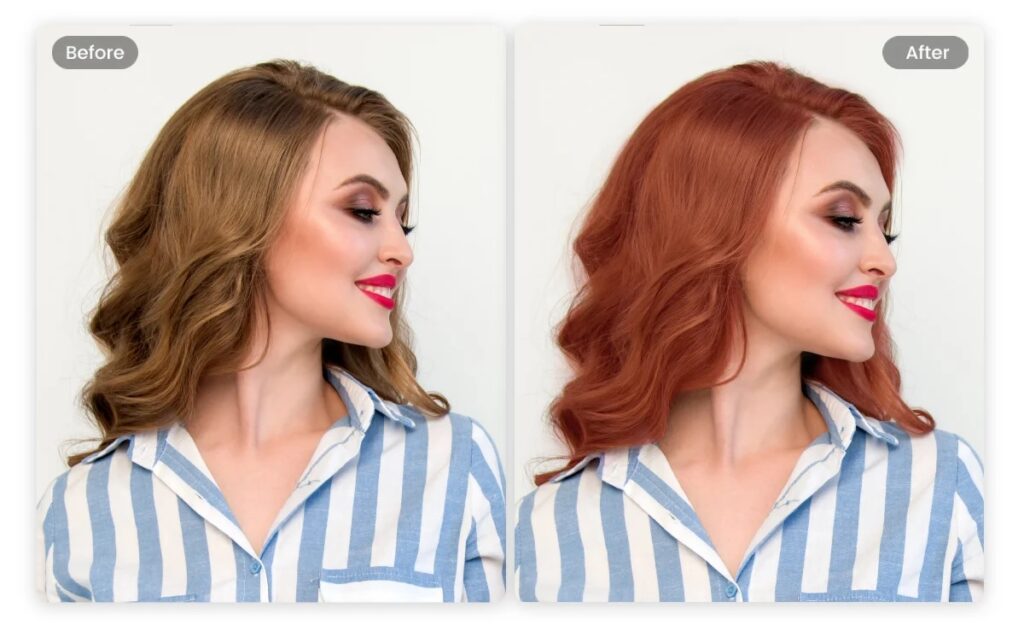
Do you love that feeling of leaving the salon with a refreshed look, but shudder at the thought of getting the color wrong?
Did you know that today you can play with all the nuances — from illuminated caramel to cherry red — without even getting near a tube of hair dye?.
Online hair color simulators put a real dressing room in the palm of your hand: just a selfie, a few taps on the screen and you're ready to test as many shades as you want before investing time and money in a transformation.
This technology has grown so much that even professionals recommend the virtual test as a first step in the process. After all, in addition to seeing the result in seconds, you arrive at the hairdresser's chair with a realistic idea of what works (and what doesn't work) for you.
Benefits of testing hair color beforehand
- Get it right the first time
The simulator shows how the color reacts to your skin, eyebrows, and even ambient lighting, saving you from unnecessary correction sessions.
- Protect your hair
Fewer chemical processes mean less dryness and breakage, ensuring long-term hair health.
- Follow fashion without trauma
Want to try the vanilla blonde look that's all the rage on TikTok? See if it suits you before you go through the bleaching process.
- Save time and money
By avoiding failed attempts, you reduce expenses at the salon and on restorative treatments.
How does a hair color simulator work?
The best apps use artificial intelligence algorithms to identify facial contours and hair strands, generating a 3D map.
The process is simple:
1. Open the app and upload a clear selfie (good front lighting is crucial).
2. Choose a color palette or type in the shade you want to test — some apps import professional catalogs, such as Koleston or L'Oréal.
3. Adjust intensity, brightness, and highlights to simulate streaks, ombré, or gradient.
4. Save the previews or share them with your hairstylist to assess technical feasibility.
The result appears in seconds, with realistic texture and shadow, eliminating guesswork about how the tone will behave outside of filters.
Tips for choosing the ideal hair color
Warm skin tones tend to glow with gold, honey, and coppery shades; cool skin tones gain elegance with platinum, pearly, and ashy tones. Neutral skin tones transition well between the two groups.
Fantasy colors (purple, blue, pink) require toning every 15 days and specific products; highlighted browns or dark blondes require less maintenance and fade less.
If you use earthy tones, redheads can enhance your outfits even more; those who opt for cool palettes may be surprised by an iced chocolate shade.
Use the simulator to predict how color will appear in natural light, artificial light, and flash photos. This helps avoid surprises at events and on social media.